Omnium Folio Guide in WoW Midnight 12.0.7: How It Works and Why It Matters
If you hear “new player power system” in WoW Midnight 12.0.7, the first question is obvious:
Is this another power system tied to gear?
With the Omnium Folio, the answer looks like no. Blizzard’s official 12.0.7 preview describes it as a new runic ledger you unlock through a short questline, then build up through weekly activities.
That matters a lot.
Because if the system really stays separate from your gear slots, it should feel cleaner to use, easier to maintain, and much less annoying to fit into your normal gearing path.
In this guide, you’ll learn:
- what the Omnium Folio is
- how to unlock it
- how the rune tree works
- what the current PTR rune choices do
- and why this system matters more than it looks
TL;DR — Omnium Folio Quick Summary
- The Omnium Folio is a new source of player power in Patch 12.0.7.
- You unlock it through a short 12.0.7 questline involving Magister Umbric and Grand Magister Rommath.
- After unlock, it works like a small rune tree / talent tree rather than an item.
- It appears to progress through weekly activities, and current PTR wording strongly suggests a timegated rollout.
- The biggest upside is simple: it does not appear to take a gear slot.
- In the current PTR version you shared, the Folio has 5 nodes, several choice nodes, and grants passive damage, healing, utility, survivability, and secondary-stat bonuses.
Simple rule:
The Omnium Folio looks like a patch power system you manage outside your gear, not through it.
What Is the Omnium Folio
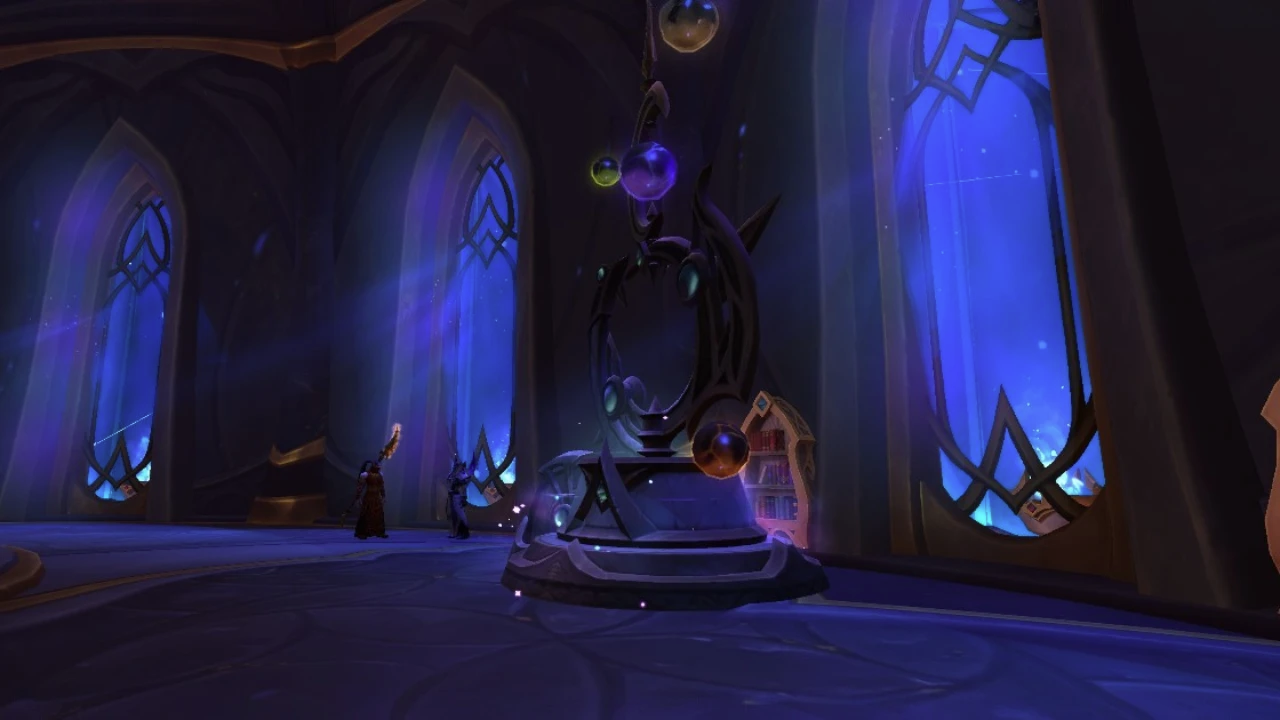
The Omnium Folio is one of the headline features of Midnight: Revelations.
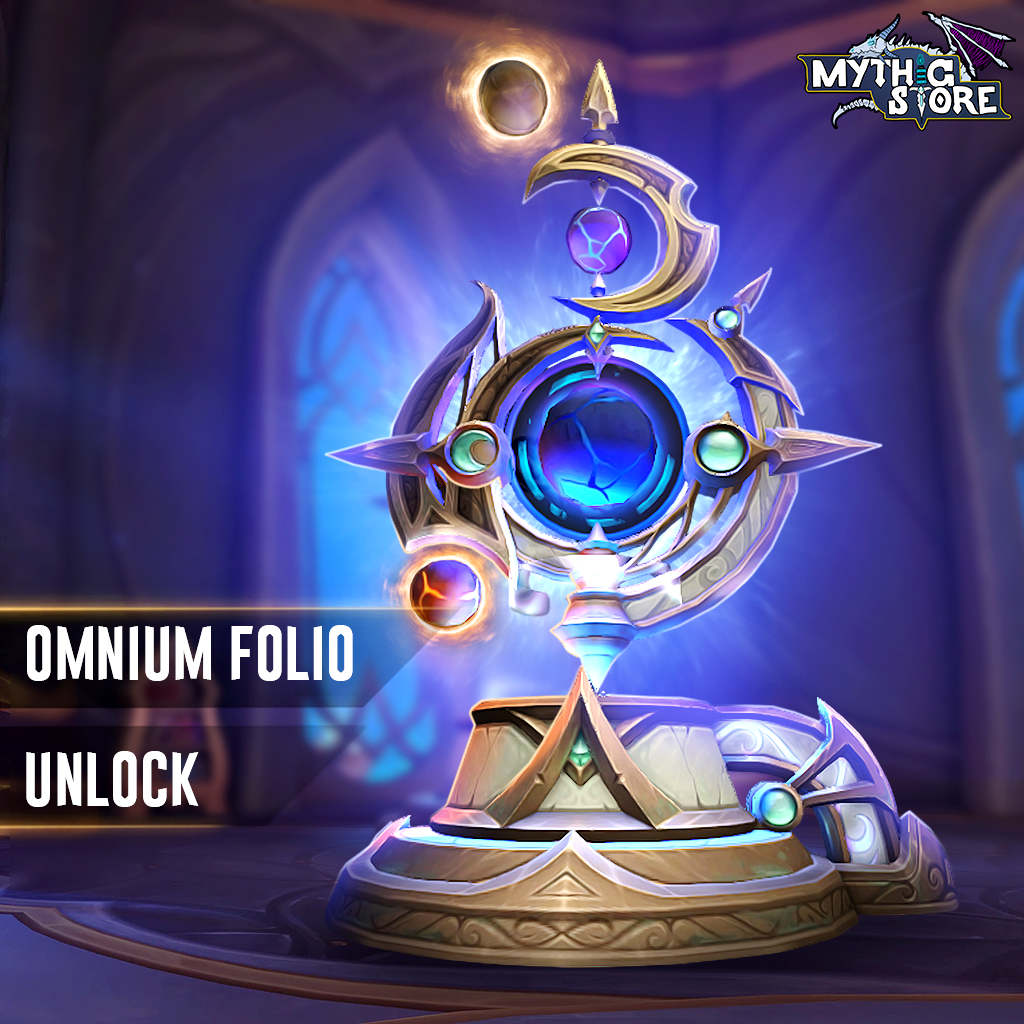
Blizzard says players work with Magister Umbric and Grand Magister Rommath to reconfigure and restore the Sunstrider Omnium, an ancient elven relic created by Dath’remar Sunstrider to study the schools of magic. After that, players receive the Omnium Folio, described as a runic ledger containing powerful runes of power for use in battle.
That is the important framing.
This is not being presented like a trinket, cloak, belt, or one weird gear piece.
It is being presented like a separate progression layer.
Why the Omnium Folio Matters More Than It Looks
The biggest reason players will care about this system is not the visual tree.
It is the structure.
A lot of temporary WoW power systems become annoying when they are attached to a piece of gear that you are forced to carry around, replace awkwardly, or keep using long after you are tired of it.
The Omnium Folio looks different.
Because based on the current PTR setup you shared, the power lives in the Folio itself, not in a gear slot. That means:
- less friction with normal gearing
- easier tuning
- cleaner alt management
- less conflict with BiS item planning
- a much easier off-switch for a future season if Blizzard wants to disable it
That last point is an inference, but it follows naturally from the system being external to gear rather than embedded in a single item slot.
How to Unlock the Omnium Folio
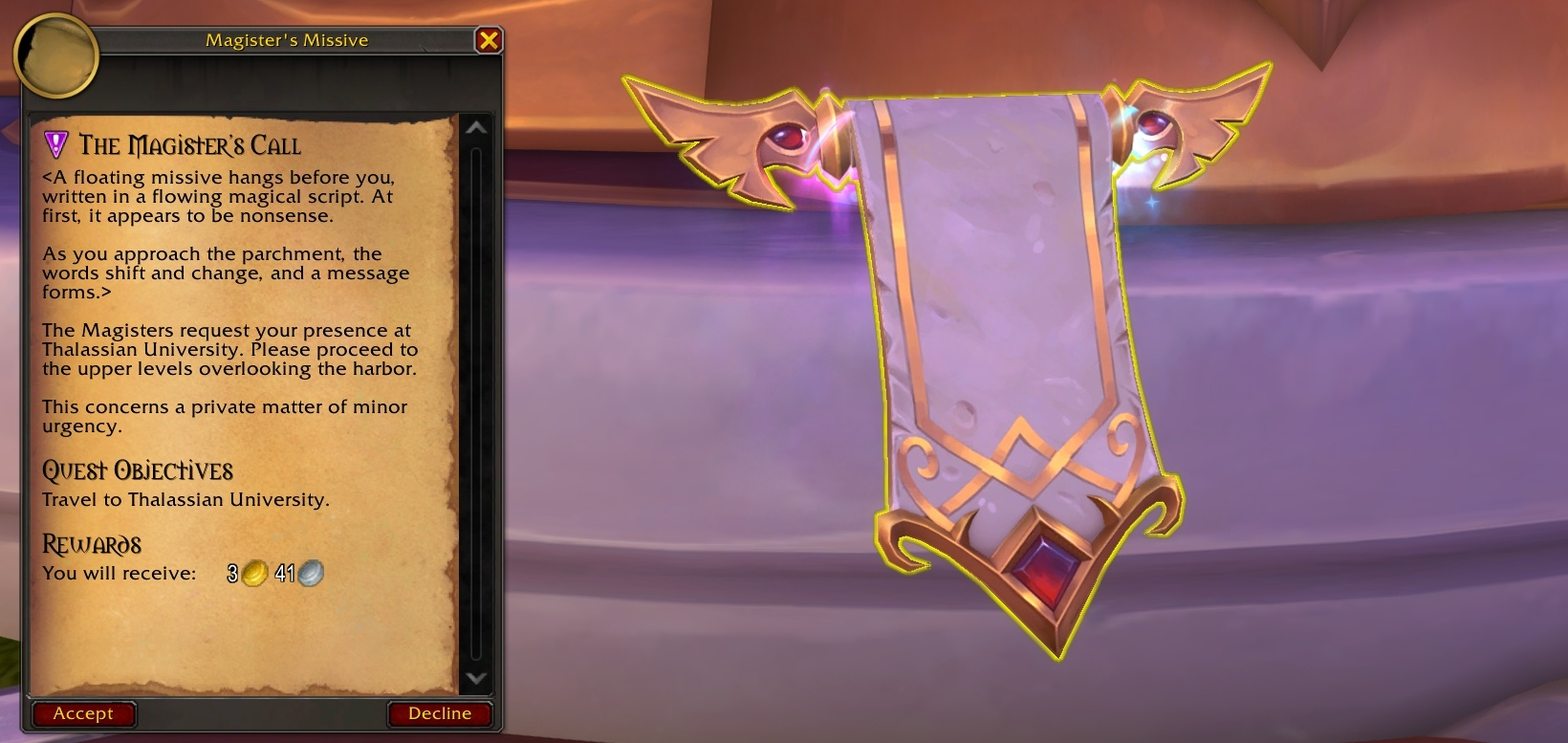
Blizzard’s official preview says the Folio unlocks after a short questline tied to restoring the Sunstrider Omnium. Once unlocked, players continue participating in weekly activities to imbue more runes and unlock their full power.
In the current PTR structure, the unlock appears to work like this:
- start the intro questline
- work with Rommath and Umbric
- restore the Omnium
- receive the Omnium Folio
- begin weekly progression from there
So the entry barrier looks low.
The real progression starts after unlock, not before it.
How Weekly Progression Seems to Work
Blizzard has already said the Folio grows through weekly activities.
Based on the PTR information you shared, the current version looks like it unlocks over time rather than all at once. That likely means:
- you unlock the base system first
- then add more rune power week by week
- then complete the tree over multiple resets
That is the most likely structure right now.
Important note:
This is PTR.
So the pacing, exact quest names, and unlock timing can still change before live release.
How the Rune Tree Works
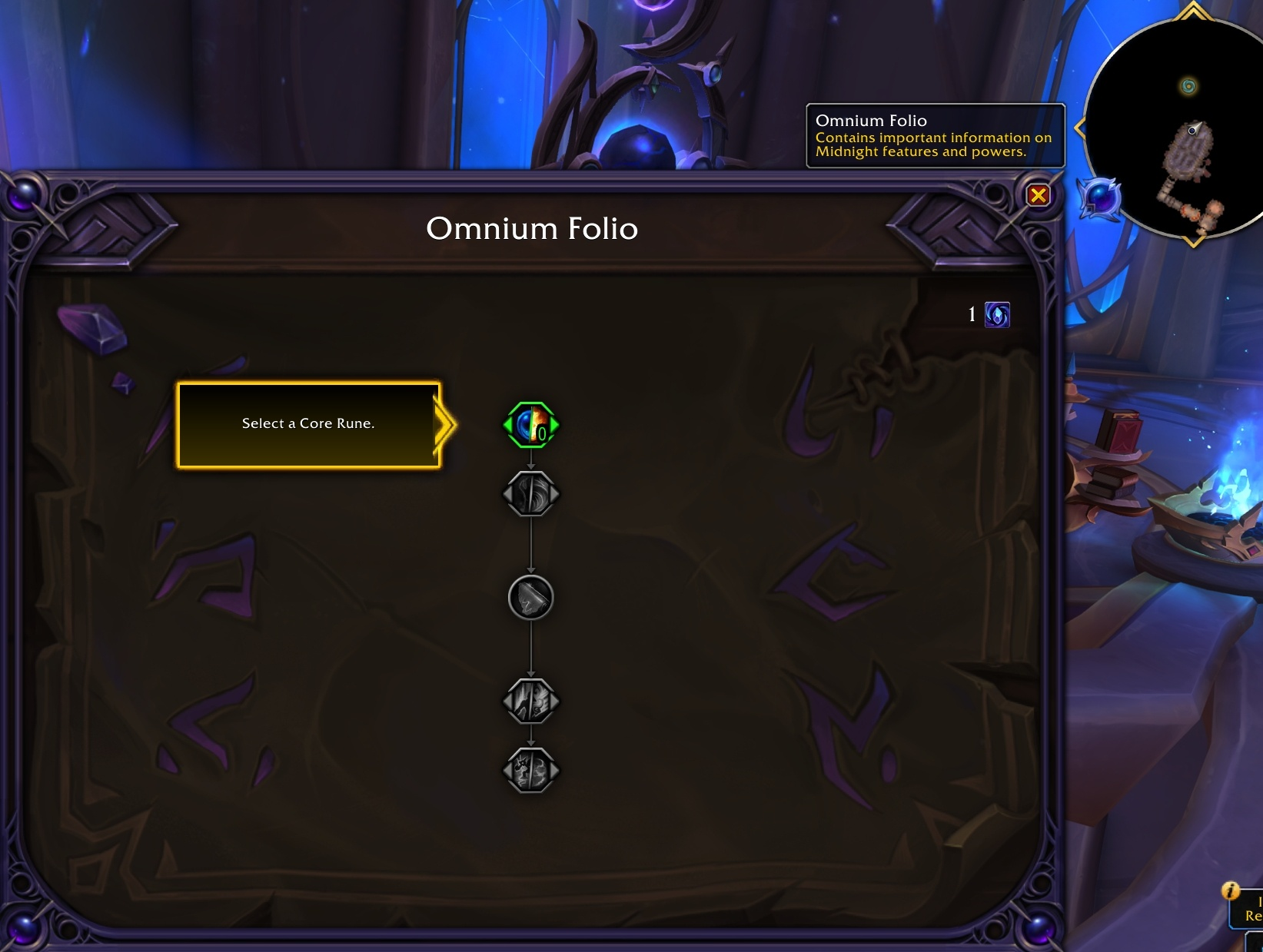
In the current PTR version you shared, the Omnium Folio contains 5 nodes.
Some are fixed nodes.
Some are choice nodes.
The system reads more like a compact mini talent tree than a huge borrowed-power board.
That is a good thing.
It means the Folio looks easy to understand at a glance:
- pick your Core Rune
- choose a defensive or utility option
- unlock a follow-up effect
- choose a stat amp
- choose a final capstone-style enhancement
That makes it much more readable than a bloated progression system.
Current PTR Rune Choices Explained
Here is the current PTR structure based on the version you shared.
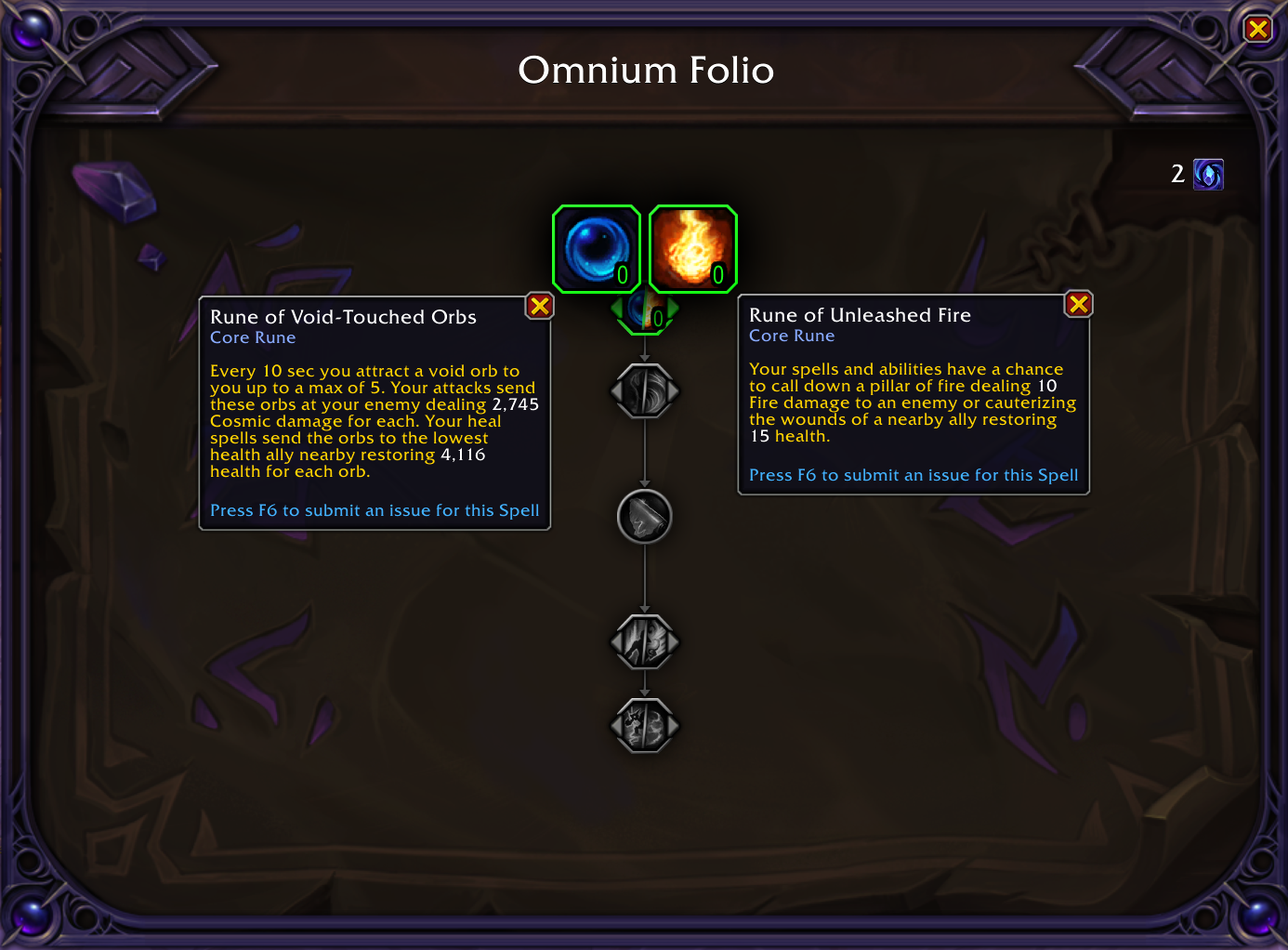
1st Choice — Core Rune
Rune of Void-Touched Orbs
Every 10 seconds, you attract a void orb up to a max of 5. Your attacks fire them at enemies for Cosmic damage, while heal spells send them to the lowest-health nearby ally for healing.
Rune of Unleashed Fire
Your spells and abilities have a chance to call down a pillar of fire that either deals Fire damage to an enemy or heals a nearby ally.
This is the core identity choice of the tree.
For most players, this will probably be the first real “which version of the system do I want to play with?” decision.
2nd Choice — Defensive or Utility Layer
Rune of Self-Mending
When below 75% health, your Core Rune also heals you.
Rune of Void-Tainted Shell
When hit for more than 10% of your max health, gain an absorb shield. Part of the absorbed amount lingers and deals damage over time to you afterward. Can only occur once every 30 seconds.
Rune of Lynxlike Reflexes
When struck in combat, increase your speed for 10 seconds. Also limited to once every 30 seconds.
This row is straightforward:
- Self-Mending looks like the safest general survival pick
- Void-Tainted Shell looks like the biggest pure mitigation pick
- Lynxlike Reflexes looks like the most world-content and mobility-friendly option
3rd Node — Follow-Up Effect
Rune of Lingering
Your Core Rune leaves behind a periodic effect that either deals damage or restores health over time for 8 seconds, depending on whether it hit an enemy or ally.
This node is simple, but it matters a lot.
Because once this unlocks, your Core Rune stops being just an instant proc and starts becoming a layered effect.
That is what makes the final choices later in the tree more interesting.
4th Choice — Secondary Stat Buff
Rune of Critical Power
Core Rune effects grant Critical Strike.
Rune of Burning Haste
Core Rune effects grant Haste.
Rune of Masterful Cunning
Core Rune effects grant Mastery.
Rune of the Versatile Warrior
Core Rune effects grant Versatility.
This row is likely where a lot of players will end up making their first “sim it later” decision.
In practice, the safest early rule is probably:
- pick the stat your spec normally values most
- or pick the stat that feels best in your content type
For example:
- Haste often feels strongest for speed and tempo
- Versatility often feels safest in mixed content
- Crit and Mastery will probably depend more on spec tuning
Final Node — Capstone Choice
Rune of Overload
Increases the effectiveness of your Core Rune by 100%.
Rune of Residual Energy
Increases the effectiveness of Rune of Lingering by 100%.
Rune of Echoes
Your Core Rune leaves an echoing curse on the target. After 10 seconds, part of all the damage and healing done by your Core and Lingering Runes is repeated.
This is the row most players will care about most.
Because this is where the tree stops being “small passive bonuses” and starts deciding how your full setup scales.
At a glance:
- Overload looks like the cleanest direct-value option
- Residual Energy looks strongest if Lingering becomes a major part of your throughput
- Echoes looks like the most scaling-friendly or synergy-friendly choice if the delayed repeat proves strong enough
Again, this is PTR-first guidance, not final live BiS.
Best Omnium Folio Picks by Playstyle
Since this is still PTR, the smartest way to judge the tree right now is by role and content type, not by pretending there is already one fixed best path.
For general DPS
A straightforward damage setup will probably look something like:
- your preferred Core Rune
- a safe utility or survival pick
- Rune of Lingering
- your best secondary stat
- Rune of Overload or Rune of Echoes
This path makes the most sense for players who just want raw throughput with minimal complication.
For healers
Both Core Runes also support healing in the current PTR design, which is a nice sign for flexibility.
Healers may value:
- Rune of Self-Mending
- Rune of Lingering
- a stat row that matches throughput needs
- Echoes if the duplicated healing ends up strong
For solo and world content
Mobility and self-survival usually matter more here.
That makes Lynxlike Reflexes and Self-Mending look more attractive than they might in pure raid parsing logic.
For survivability
If your goal is “make this system help me live,” the obvious standouts are:
- Rune of Self-Mending
- Rune of Void-Tainted Shell
Those are the easiest defensive reads in the current tree.
Is the Omnium Folio Timegated?
It looks like it probably is.
Blizzard has already said the system continues through weekly activities.
And the PTR structure you shared strongly suggests staged unlocks rather than a full day-one completion.
So the safest expectation right now is:
yes, the Folio is likely meant to unfold over multiple weeks.
That said, it is still PTR, so the exact cadence can change.
Why This Could Be a Better Patch Power Model
The Omnium Folio looks promising for one simple reason:
it respects your gear.
If Blizzard keeps this system separate from item slots, then it avoids one of the most annoying problems temporary power systems usually create.
That gives it a few immediate advantages:
- no weird slot conflict
- no “I hate this item but have to wear it” problem
- easier gearing for mains and alts
- cleaner raid and Mythic+ itemization
- easier patch-to-patch tuning
This does not automatically make the system perfect.
But it does make the foundation better.
Common Mistakes Players Will Make
When this goes live, these will probably be the most common errors:
Treating it like just another item
It looks much closer to a mini progression tree than a gear piece.
Ignoring the weekly step
If the system is weekly-gated, skipping one reset will feel worse than skipping a casual side activity.
Picking runes randomly
Even a small tree can matter a lot if the capstone or stat row is strong.
Pretending PTR values are permanent
They are not.
Numbers, pacing, and even node order can still change.
Underestimating the system because it looks small
A five-node system can still be one of the biggest throughput levers in a patch if the tuning is strong.
Is the Omnium Folio Worth Caring About?
Yes.
Even before final tuning, the answer is clearly yes.
Blizzard is positioning the Omnium Folio as one of the core features of Midnight: Revelations, not as a tiny side mechanic.
So if you care about:
- open-world power
- raids
- Mythic+
- healing throughput
- damage throughput
- patch progression in general
then this is a system worth following closely.
Especially because it looks like one of the cleaner patch-power models WoW has tried in a while.
Want Faster WoW Progress in 12.0.7?
If you want to stay ahead in WoW Midnight 12.0.7 while new systems like the Omnium Folio roll out, Mythic-Store.com can help with:
- WoW Gold
- Mythic+ runs
- raid progression
- general WoW services
Use coupon code BLOG10 for a discount.
Final Thoughts
The Omnium Folio looks like one of the smartest parts of WoW Midnight 12.0.7 so far.
Not because it is huge.
Because it is clean.
It gives players a new layer of power, but it does not seem to force that power into a gear slot. It looks readable, weekly-driven, and easy to fit into normal progression. Blizzard’s official preview also makes clear that it is one of the main progression pillars of the patch.
If the tuning lands well, this could end up being the kind of patch system players actually enjoy maintaining.
FAQ
What is the Omnium Folio in WoW Patch 12.0.7?
It is a new runic player-power system tied to the restored Sunstrider Omnium in Midnight: Revelations. Blizzard describes it as a runic ledger containing powerful runes for battle.
How do you unlock the Omnium Folio?
You unlock it through a short 12.0.7 questline involving Magister Umbric and Grand Magister Rommath, then continue progressing it through weekly activities.
Does the Omnium Folio take a gear slot?
In the current PTR version you shared, it does not appear to take a gear slot, which is one of the biggest reasons players are reacting positively to it.
How many weekly unlocks does the Omnium Folio have?
The current PTR structure strongly suggests a multi-week rollout, and based on the version you shared it appears to unfold over five steps, though that can still change before live release.
What runes are currently in the Omnium Folio on PTR?
The current PTR version includes Rune of Void-Touched Orbs, Rune of Unleashed Fire, Rune of Self-Mending, Rune of Void-Tainted Shell, Rune of Lynxlike Reflexes, Rune of Lingering, Rune of Critical Power, Rune of Burning Haste, Rune of Masterful Cunning, Rune of the Versatile Warrior, Rune of Overload, Rune of Residual Energy, and Rune of Echoes.
Is the Omnium Folio likely to be timegated?
Probably yes. Blizzard has already said the system grows through weekly activities, and the PTR structure currently looks staged rather than instantly complete.